
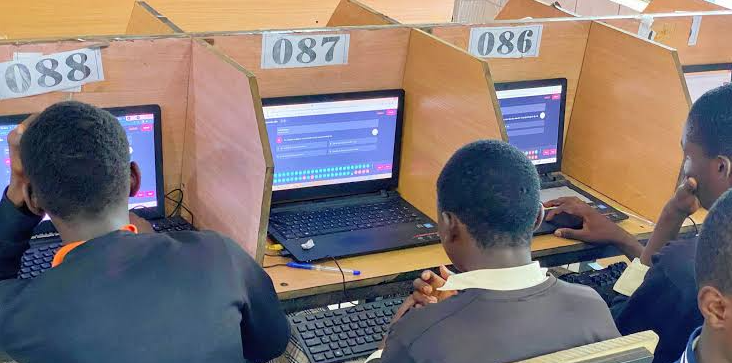
- Web-native CBT dramatically reduces cheating: WAEC data shows examination malpractice dropped significantly during the 2026 WASSCE rollout, with infractions in dedicated computer-based centers falling below one percent compared to paper-based venues.
- Digital platforms eliminate logistical vulnerabilities: Moving assessments online removes the risks of physical distribution, armed transport, and pre-exam paper leaks by keeping encrypted questions on servers until verified candidates log in.
- Automation saves instructional time despite infrastructure hurdles: Centralized digital repositories and automated grading tools free teachers from repetitive marking, though successful adoption requires reliable hybrid guardrails like offline fallbacks and human oversight for rural schools.
In September 2026, the West African Examinations Council reported that examination malpractice across its 2026 WASSCE diet dropped from 9.7 percent to 8.59 percent, hitting an eight-year low. Inside dedicated Computer-Based Testing centres, infractions fell below one percent, while traditional paper-based and hybrid venues accounted for nearly all recorded cheating.
Paper Logistics Keep Leaving Wide Open Security Gaps

Physical examination pipelines across Nigeria and Ghana rely on centralized printing, armoured road transport, and local custody chains before papers reach school halls. In August 2025, WAEC Public Relations Head John Kapi confirmed in Accra that invigilators caught snapping live Visual Arts and Oral English papers on mobile phones had circulated images to external syndicates during active sessions. Even when central vaults hold firm, late school registrations—which stretched into April 2026 for the May diet—force frantic last-minute printing runs and inflate logistical budgets.
Every physical touchpoint between a printing press in Lagos or Accra and a rural examination hall is a potential point of failure. Schools and examination boards spend millions of naira and cedis on security convoys, tamper-evident bags, and duplicate script printing only to watch a single smartphone compromise an entire hall. Moving tests onto web-native browsers strips out the physical distribution chain completely. Questions remain encrypted on servers until a verified candidate logs in, rendering pre-exam paper leaks structurally impossible. Yet the transition exposes a sharp infrastructure divide: schools in high-density urban zones like Lekki or East Legon can deploy 50-terminal labs easily, while rural districts still wrestle with erratic power and unstable broadband.
Centralized Question Banks Cut Printing Overhead and Grading Delays
Beyond security, paper assessments bury West African secondary teachers under weeks of repetitive administrative labour. Instructors routinely hand-grade hundreds of objective scripts and theory booklets at the end of every term, delaying student performance data until well after the next term begins. Regional school management platforms have moved directly into this gap, led by tools such as Bluerain CBT—the AI-powered assessment module built into Bluerain School Management Software—which supports both NGN and GHS billing alongside public catalogues housing over 5,288 practice questions across 63 subjects and 48 exams spanning JHS 3 and SHS 3 syllabi.
A teacher spending three weekends scoring multiple-choice sheets is not refining lesson plans or coaching struggling learners. Systems like Bluerain CBT let schools centralize tagged exam items into a single digital repository, generate randomized assessments with strict time limits and anti-cheating controls, and grade submissions instantaneously upon completion. Crucially, the platform also allows schools to export printable hard-copy exams directly from the same bank when computer labs are at capacity. That dual-mode flexibility matters in West Africa, where all-or-nothing digital mandates often stall out in under-equipped classrooms. Still, automated rubrics handle structured objective items far better than nuanced humanities essays, meaning educators must keep human oversight on long-form grading.
How do automated question generators prevent cheating without hurting exam quality?
Curriculum-aligned generators eliminate identical test papers by pulling randomized item pools and shuffling question sequences per candidate, stopping hall collusion instantly. Because teachers tag and lock parameters to official JHS, SHS, WAEC, or NERDC syllabi and review generated items before publishing, schools maintain strict academic rigor while cutting test-prep and marking time from days to minutes.
Evaluation Trust Depends on Hybrid Guardrails
During the 2026 CB-WASSCE rollout, WAEC required host centres to maintain at least 50 functional computers while projecting essay questions onto hall screens so candidates wrote answers on physical booklets without receiving printed question papers. Meanwhile, school administrators raised concerns over grading anomalies and technical glitches during initial computer-based runs, proving that software alone does not guarantee institutional trust.
If students or parents suspect that a server timeout or an uncalibrated automated rubric cost them university admission credits, confidence in digital testing will collapse faster than paper ever did. Schools adopting web-native CBT cannot treat automation as a hands-off replacement for academic oversight. Reliable deployment demands resilient local fallback options—including the ability to print randomized hard-copy variants when power fails—strict browser controls to block tab-switching, and mandatory human verification where department heads audit every auto-generated quiz before it goes live. In September 2026, following the rollout of its computer-based testing expansion, WAEC confirmed that zero master question papers leaked across all 1,950,726 registered candidates.