
- Instant AI-powered explanations: Unlike static answer keys in printed booklets, automated CBT platforms break down the underlying logic, identify specific syllabus topics, and provide immediate micro-lessons for missed questions.
- Frictionless digital workflows: CBT apps eliminate the distraction of flipping between question pages and back-cover answers, streamlining timed drills and study resources onto a single screen.
- Smart mistake tracking: Software automatically isolates error patterns by subject and curriculum topic, replacing manual red-pen tracking with data-driven performance reports for targeted revision.
Printed past-question booklets are losing desk space across West Africa. As major examination bodies transition to digital screens, students in Lagos, Accra, and Kumasi are swapping heavy newsprint compilations for automated Computer-Based Testing (CBT) platforms.
The shift follows strict institutional timelines. Nigeria's Joint Admissions and Matriculation Board (JAMB) introduced CBT in 2013 and scrapped Paper-Pencil Testing completely in 2015 under former Registrar Professor Dibu Ojerinde. In 2026, the West African Examinations Council (WAEC) rolled out computer-based administration for school candidates in the West African Senior School Certificate Examination (WASSCE) following policy directives announced by Nigerian Head of National Office Dr. Amos Dangut.
1. Instant Step-By-Step Logic And Topic Insights Break Down The Why
Static booklets fail at the exact moment a candidate needs help most. A printed compilation typically prints '14. C' on page 212 without explaining the theorem, grammatical rule, or historical date behind that letter. Candidates guess, check the back, nod, and repeat the exact same mistake two weeks later.
Modern automated CBT prep platforms eliminate blind guessing. Platforms like Bluerain CBT—used by schools such as Brooks Academy in Accra and St. Michael's Anglican schools in Kaduna—go far beyond automating marking and grading. When a student submits an answer on Bluerain CBT, the system generates AI-powered explanations that break down the underlying logic, identify the exact syllabus topic or sub-topic the question was derived from, and recommend structured ways to learn more about that concept.
Other regional platforms, including Myschool CBT, founded by Chima Ememe, and Prep50, developed in Anambra by Ejeziem Joseph Chukwuemeka, similarly trigger immediate analytical breakdowns the moment a candidate submits an answer. Real-time feedback closes the cognitive loop before a student moves to the next prompt, turning every failed mock question into a targeted micro-lesson.
2. Zero Friction And Faster Study Flow
Flipping between question pages and back-cover answer keys destroys concentration. Physical booklets require two hands, constant page-holding, and separate rough notebooks that clutter study tables in crowded hostels and school libraries.
CBT apps compress the entire workflow onto a single screen. Candidates tap an option, review their automated grade, read the embedded topic explanation, and explore linked study materials without breaking eye contact with the problem. Tools such as Bluerain CBT and Eduvate CBT bundle syllabi, topic categorization, and guided study resources directly inside the interface.
Speed matters during timed drills. A candidate practicing 40 UTME physics questions on a phone or school desktop saves several minutes of manual page-turning per session, leaving more mental bandwidth for problem-solving.
Why do automated CBT explanations outperform static answer keys during revision?
Automated CBT apps like Bluerain CBT deliver instant grading alongside step-by-step explanations right after a student misses a question. Unlike printed booklets that hide a single letter at the back, these platforms pinpoint the exact syllabus topic behind each question and suggest follow-up learning resources to close knowledge gaps immediately.
3. Targeted Revision Through Smart Mistake Tracking
Paper books cannot remember what a student got wrong. Candidates using physical past questions must manually circle missed numbers with red biros and flip through hundreds of pages later to review weak areas.
Software tracks error patterns automatically. When a student logs practice sessions on platforms equipped with AI-powered performance analytics like Bluerain CBT, the engine isolates failed questions by subject and curriculum topic. A candidate preparing for WASSCE in Kumasi or Abuja can review automated performance reports and drill down into the exact topics where marks were lost.
Data replaces guesswork during the final week before exams. Instead of re-reading entire textbooks, students focus on their weakest syllabus modules and follow recommended learning pathways until accuracy rates climb above target cutoffs.
Aligning Daily Practice With Digital Exam Halls
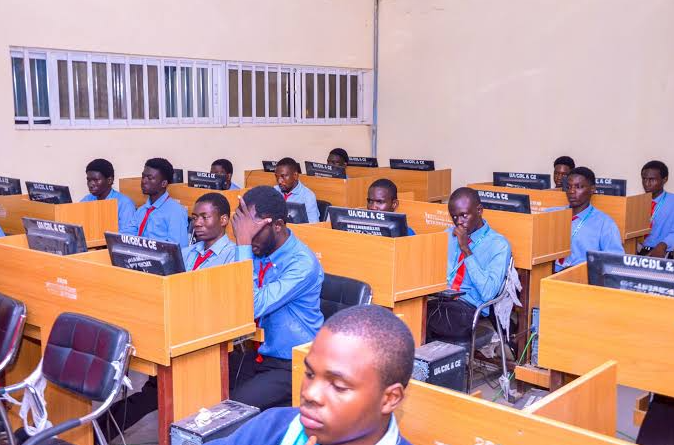
Exam anxiety often stems from unfamiliar interfaces rather than lack of knowledge. Practicing exclusively on paper leaves candidates unprepared for on-screen timers, radio buttons, and keyboard shortcuts used in accredited testing centres.
Daily digital simulation builds muscle memory. Candidates who rehearse under automated countdown clocks learn to pace themselves across objective sections without panicking when warning alerts flash.
The institutional push toward digital testing has reshaped West African exam preparation permanently. JAMB established its foundational mandate through Decree No. 2 on February 13, 1978, before executing its full nationwide transition from paper-and-pencil testing to computer-based testing in 2015.