
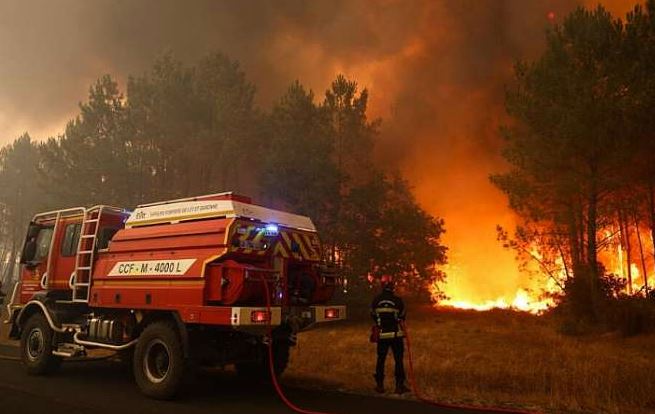
BAELEN, Belgium — Emergency crews battled Belgium's largest wildfire on record on Sunday, August 16, 2026, as a massive blaze tore through approximately 30 square kilometers of the High Fens nature reserve in the country's eastern Liège province. The fire, which erupted on Friday amid severe drought conditions, continued to push eastward toward the German border, prompting extensive multi-national containment operations.
Liege provincial governor Hervé Jamar confirmed that more than 250 emergency personnel were deployed to the disaster zone, including over 100 Belgian and German firefighters alongside military units and civil protection staff. Specialized aerial support was provided by firefighting helicopters operated by the Belgian federal police and the Netherlands. Local agricultural workers also assisted crews by deploying tanker trucks filled with water pumped from nearby lakes.
Severe Drought and Complex Terrain Hinder Containment
The unusual mix of heathland and peat bogs across the High Fens significantly complicated firefighting efforts, allowing subsurface embers to reignite even after surface flames were subdued. Meteorological agencies noted that the disaster unfolded during an intense continental heatwave marked by critically low soil moisture levels and widespread drought across Western and Central Europe.
Cross-border cooperation proved critical as the fire approached international boundaries. Fire departments from neighboring German municipalities coordinated tactical lines with Belgian commanders to prevent the blaze from jumping infrastructure corridors. Civil protection authorities maintained mandatory evacuation alerts for vulnerable settlements near the reserve.
Broader Regional Impacts Across Europe
The Belgian crisis coincided with severe wildfire outbreaks across other parts of the continent, including Greece, where two fatalities were recorded on the island of Salamina. European Commission data indicates that extreme weather conditions have strained emergency resources in multiple member states throughout August.
Provincial emergency command centers announced that specialized monitoring teams will maintain round-the-clock surveillance across the charred perimeter to prevent secondary flare-ups. Operational debriefings and damage assessments are scheduled to commence when final containment lines are certified on August 19, 2026.
What caused the record-breaking wildfire in the High Fens nature reserve?
The record-breaking wildfire was fueled by persistent extreme heat, exceptionally low soil moisture levels, and severe drought conditions that gripped Western Europe throughout the summer, compounded by the highly combustible mix of dry heathland and peat bogs in the region.
Local emergency management teams are scheduled to complete final structural damage assessments and wrap up containment operations on August 19, 2026.