
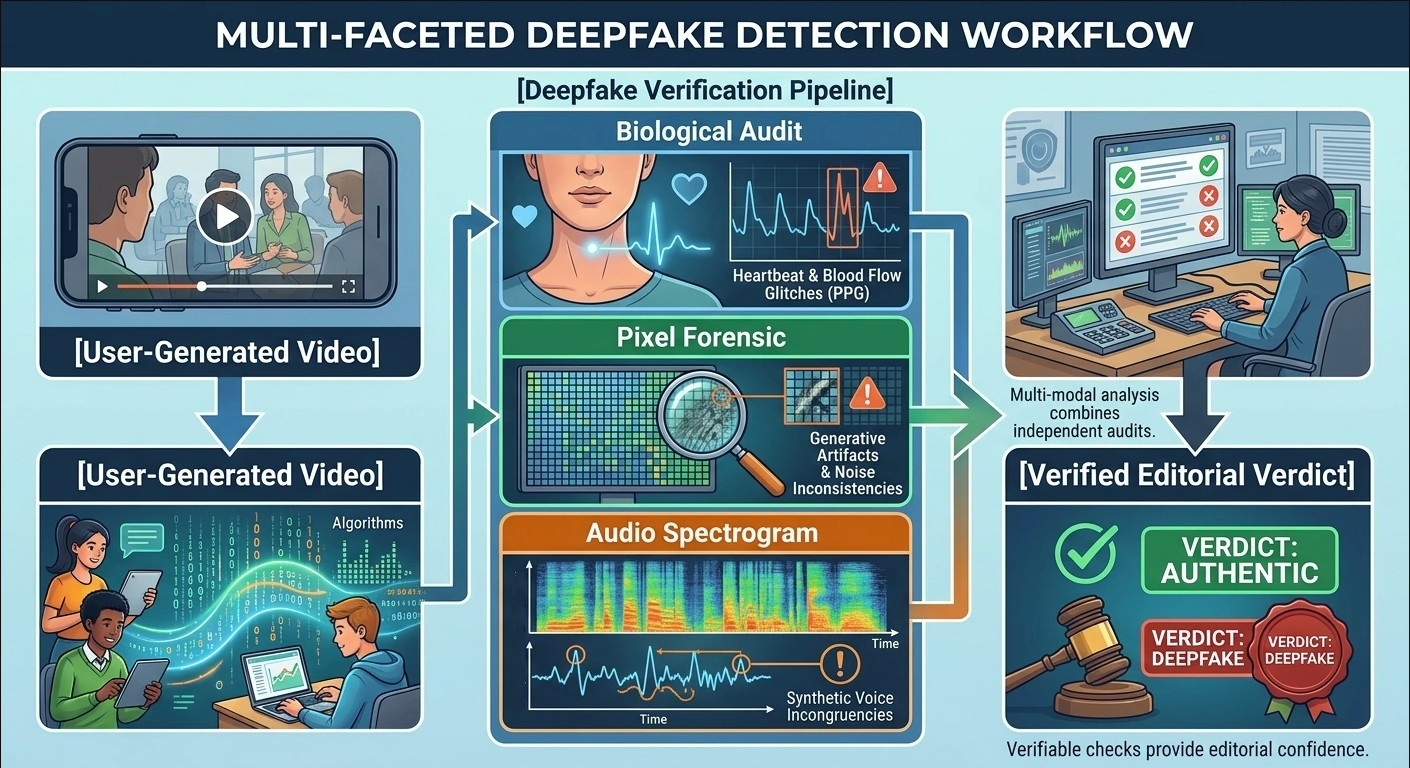
- Rising threat of synthetic media: Hyper-realistic deepfakes spread rapidly during political campaigns, overwhelming traditional fact-checking workflows in regional newsrooms.
- Automated forensic detection: Media organizations are deploying advanced machine learning tools to inspect media at the pixel level, tracking biological signals like pulse patterns and geometric flaws to expose forgeries.
- Comprehensive verification platforms: Upgraded multimedia scanning systems analyze text, images, video, and audio components simultaneously, giving journalists instant diagnostic feedback prior to publication.
Modern newsrooms encounter a severe threat from hyper-realistic synthetic media. Generative artificial intelligence tools let users build fake video and audio files with ease. This development disrupts the standard workflow for verification in African media houses. During intense political campaigns, unverified uploads spread rapidly across digital networks before traditional fact-checking desks can respond.
To defend public conversations, press organizations deploy automated machine learning systems. These forensic modules inspect files at the pixel level to spot anomalies. This approach shifts media defense from slow manual inspection to instant diagnostic processing. Investigative reporters use these shields to keep regional reporting reliable and accurate.
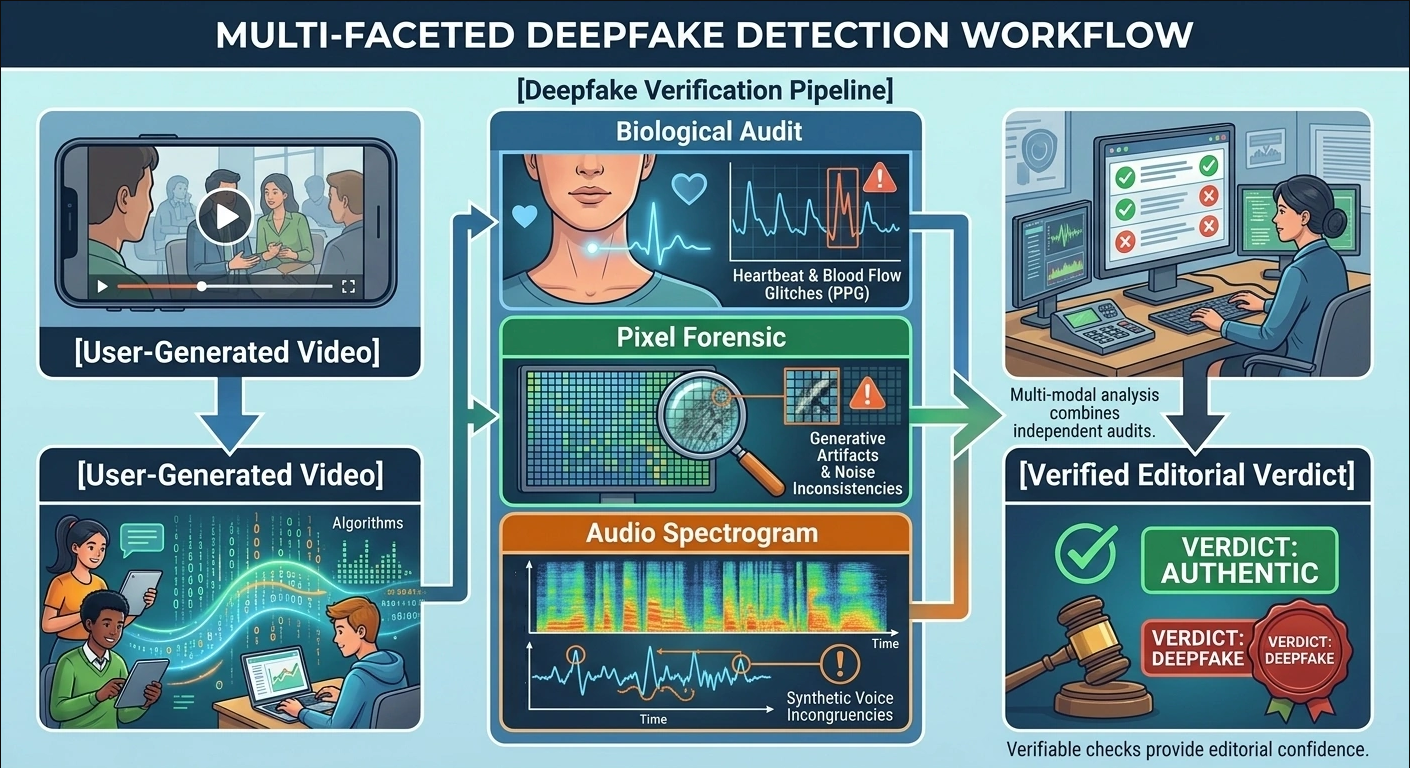
Auditing Hidden Biological Signals and Generative Artifacts
Advanced deepfakes do not just change simple background details. They place fake statements directly into the mouths of political leaders. Journalists cannot rely on basic checks to spot these alterations anymore. Detection software focuses on identifying invisible traces left behind by neural networks during file generation.
Detection tools evaluate physical signs like blood flow patterns across human skin. Software algorithms track minor skin tone shifts caused by pulse rates. Synthetic faces rarely recreate this pattern correctly, exposing the asset as a fake. Furthermore, systems audit geometric flaws such as asymmetric irises or strange pixel boundaries around jawlines.
Upgrading Media Systems with Advanced Multimedia Scanning Platforms
Organizations like Vendro News are upgrading their digital detection resources to combat manipulative files. The current Fact-Checking and Credibility Scanner inspects text claims and source URLs against live signals. This setup flags risks in written copy quickly. The media group plans to expand this system into an all-in-one multimedia verification centre.
This technical roadmap introduces critical diagnostic expansions to support investigative media teams. The platform will build modules specifically designed to break down audio, video, and image components. Journalists get immediate feedback on files before publishing them to wider networks.
Deploying Image Forensics and Deepfake Video Shields
The upcoming platform framework introduces structured tools to handle multiple files. The upgrades split functionality into distinct operational sectors:
Image Forensic Extension: This pipeline strips metadata to identify hidden software manipulation markers. It operates reverse searches to check if teams recycled older graphics. In addition, error level analysis tools scan image compression rates to discover where creators injected modified pixels.
Deepfake Video Shield Extension: This engine processes short video files to search for structural glitches. Computer vision models inspect frames to spot irregular facial movements. The audio module isolates voice tracks, turning sound into spectrograms to uncover voice clones by highlighting missing breathing spaces.
How do regional media houses safeguard verification workflows against synthetic manipulation?
Regional media houses deploy automated multi-layered diagnostic pipelines to isolate manipulated digital assets before publication. By combining pixel-level forensic scans, spectrogram audio analysis, and cross-reference source protocols, newsrooms establish robust verification shields that protect public discourse from deceptive synthetic media across West Africa.