
- Socioeconomic and household stability: Financial security and consistent access to basic resources protect developing brains from chronic stress, serving as the foundational bedrock for long-term academic and career achievement in West Africa.
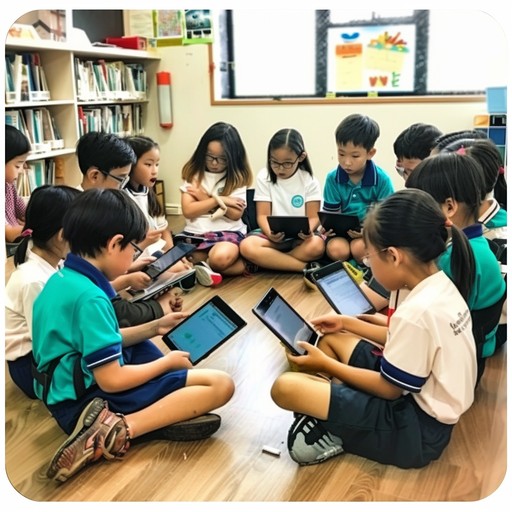
- Early education and technology: Early literacy milestones and interactive digital learning tools tailored to regional contexts effectively bridge resource gaps in underfunded public schools, fostering essential computational and problem-solving skills.
- Emotional resilience and community support: Strong parental attachment, non-cognitive traits like grit, and protective neighborhood networks shield youth from hardship while equipping them with the social intelligence necessary for modern workforce competitiveness.
A child's trajectory toward long-term developmental achievement depends on a complex matrix of structural stability, early cognitive stimulation, and relational safety nets. Modern behavioral research rejects the outdated notion that intelligence alone dictates adult accomplishment. Instead, contemporary experts analyze how socioeconomic backgrounds interact with localized educational infrastructure to form foundational skill sets. Media groups and educational bodies across hubs like Lagos and Accra actively track these environmental inputs. They seek to understand why some children transcend systemic barriers while others remain constrained by surrounding hardships.
By mapping out these key childhood factors, institutional stakeholders design better intervention pathways for underserved global populations. The domestic environment acts as the primary crucible where a child builds critical coping mechanisms, linguistic baselines, and general self-efficacy. When families, schools, and local communities align their support mechanisms, young learners acquire the necessary non-cognitive strengths required for future labor market competitiveness. Recognizing these specific core pillars allows West African administrators to shift from reactionary welfare strategies toward long-term developmental investments.
Socioeconomic Status and Household Stability
Financial stability within the immediate household represents a profound determinant of a young person's future capacity. Economic security ensures consistent access to vital physical resources, including balanced nutritional intake and regular pediatric healthcare. Children raised in secure urban areas or stable semi-rural districts experience far lower levels of chronic physiological strain. This baseline protection allows developing brains to focus entirely on cognitive acquisition rather than survival mechanics. Adequate physical housing conditions further minimize toxic stress patterns that often impair early executive functioning skills.
Conversely, severe material deprivation forces families to prioritize immediate survival needs over long-term educational investments or enriching extracurricular materials. Resource scarcity limits exposure to books, digital learning toys, and structured play environments during critical early formatting years. Neighborhood environment directly influences personal aspirations, as safe surroundings offer positive structural templates and communal peace. Organizations tracing regional metrics emphasize that household resource allocation heavily impacts the initial cognitive capital a child brings into formal primary classrooms.
Quality of Foundations and Early Childhood EdTech
Early literacy benchmarks and access to modern interactive learning frameworks serve as reliable predictors of future academic completion. Children who achieve independent reading proficiency by the completion of third grade demonstrate drastically higher rates of high school graduation. Access to specialized early childhood centers equipped with tactile instructional materials accelerates vocabulary acquisition and spatial reasoning. Media innovators stress that integrating localized educational software helps bridge severe resource deficits common within underfunded public school systems.
Deploying interactive classroom technology allows teachers to provide individualized learning pacing, moving past rigid, old-fashioned rote memorization systems. Tech integration must occur early to build familiarity with fundamental computational reasoning and independent problem-solving skills. When regional tech classrooms utilize contextualized digital software, children absorb complex concepts more naturally through regional idioms and relatable local narratives. Strategic infrastructure deployment in primary spaces effectively democratizes quality education across varying social classes.
Emotional Resilience and Parental Attachment
Non-cognitive skills like grit, impulse control, and emotional regulation often outperform traditional intelligence metrics in predicting long-term career growth. The capacity to view failures as temporary educational setbacks allows individuals to navigate complex corporate and creative spaces later in life. Developing this level of psychological resilience requires a stable home base where children feel secure enough to take healthy intellectual risks. Caregivers who maintain a supportive, low-conflict environment cultivate strong internal self-belief systems within their children.
Authoritative parenting models blend high behavioral expectations with intense emotional warmth and regular open dialogue. This balanced dynamic produces independent young adults who understand boundaries while feeling deeply valued by their family systems. Outlining feelings clearly helps children process anxiety, frustration, and systemic peer pressures without defaulting to destructive behaviors. Emotional security established during early developmental periods protects vulnerable minds from surrounding cultural stigmas or institutional neglect.
Peer Frameworks and Communal Safety Nets
The immediate social circle a child navigates during adolescence exerts a powerful influence over personal values, study habits, and lifestyle choices. Peer networks act as direct behavioral mirrors, setting the baseline for what a child considers achievable or socially acceptable. Safe communal spaces, neighborhood youth clubs, and structured religious associations offer essential mentoring pathways beyond formal classroom bounds. Access to these diverse external networks exposes young minds to unique career options, technical internships, and professional sponsorship opportunities.
Developing high levels of social intelligence enables children to collaborate across diverse teams, build valuable friendships, and resolve interpersonal friction. Strong community-based protection committees work actively to prevent systemic dropouts by stepping into fragile households during periods of sudden economic shock. When community leaders model constructive civic engagement, youth naturally internalize positive societal values. These shared neighborhood systems ensure that vulnerable individuals receive necessary guidance even when immediate parental supervision remains unavailable.
Why is classroom technology transforming West African education systems?
Classroom technology bridges severe learning gaps by delivering interactive, localized educational content directly to students. Digital platforms allow schools across West Africa to access up-to-date curricula, specialized teacher training materials, and remote learning tools. This shift improves student engagement, tracks performance metrics, and equips youth with critical modern skills necessary for a digital economy.
Intentional caregiving remains the final binding constraint that unites all environmental and institutional factors into a cohesive framework for individual success. True parental investment requires a deep, active involvement in daily academic tasks, checking classroom progress, and deliberately reinforcing positive behavioral habits. This comprehensive domestic grounding ensures that external structural interventions yield maximum benefits for the next generation. This ongoing pursuit of human capital optimization aligns closely with long-term regional development frameworks, mirroring structural guidelines established under the historic passage of the Universal Basic Education Act on May 27, 2004.