
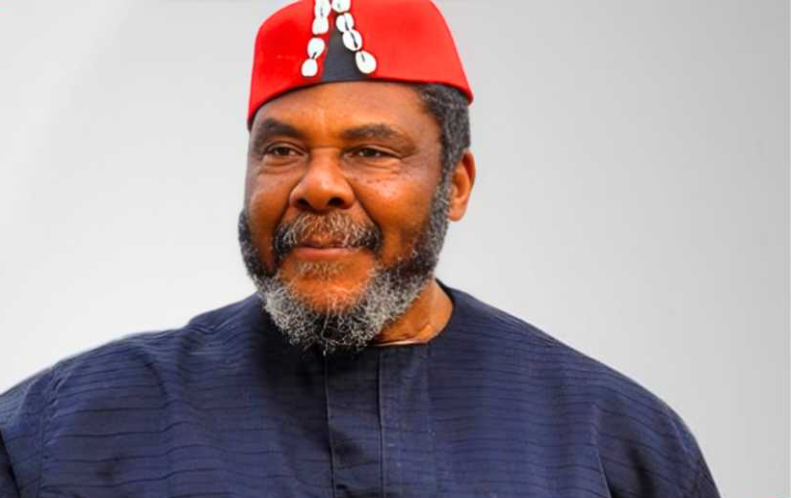
- Legendary broadcaster and Nollywood icon Pete Edochie passed away at age 79 in Enugu after a prolonged battle with prostate cancer.
- His rigorous training in public radio instilled a mastery of vocal authority, strict diction, and deliberate pacing that defined his acclaimed screen performances.
- His death exposes a critical archival gap in West African media, emphasizing the urgent need to digitize early broadcast history and preserve foundational craft over algorithm-driven digital production.
Chief Pete Edochie, the retired broadcaster and Nollywood patriarch, died at 12:30 a.m. on Wednesday, November 25, 2026, in Enugu after a prolonged battle with prostate cancer. His eldest son, Chief Leo Pete Edochie, confirmed the passing at age 79 in a family statement titled 'An Iroko Has Fallen' shared on Instagram. While tributes across Lagos, Accra, and Kumasi focus on his iconic film roles, his death closes a distinct chapter in West African media history where public radio discipline directly shaped screen storytelling.
From Public Radio Booths to National Television
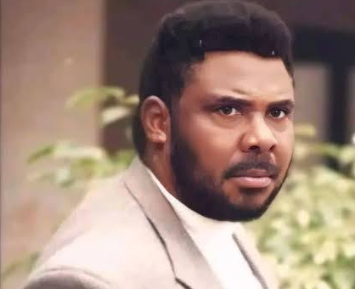
Born on March 7, 1947, in Zaria and hailing from Akamnato, Ifite Nteje in Anambra State, Edochie built a twenty-year career in journalism and broadcast administration before taking a major screen role. He joined the Eastern Nigeria Broadcasting Service in 1967 at age 20 as a junior programmes assistant, trained with the British Broadcasting Corporation in 1980, and rose to become Director of Programmes and Deputy Managing Director at the Anambra Broadcasting Service. When the Nigerian Television Authority adapted Chinua Achebe's novel Things Fall Apart in 1987, Edochie's portrayal of Okonkwo earned international acclaim and drew a BBC crew to Nigeria to interview him.
Modern streaming producers in Lagos and Accra often treat acting as a visual, social-media-ready performance, yet Edochie proved that vocal authority comes from the radio booth. Public broadcasters in post-independence Nigeria enforced strict diction, pacing, and script preparation because live studio errors could not be fixed in post-production. Today's fast-turnaround digital shoots frequently skip table reads and voice coaching in favor of rapid multi-camera setups, resulting in dialogue that feels rushed and disposable. Edochie's career exposes a structural trade-off in contemporary African filmmaking: higher production volume and sharper digital cameras have not replaced the foundational discipline of trained broadcast journalism.
Oral Tradition Against Algorithm-Driven Scripts
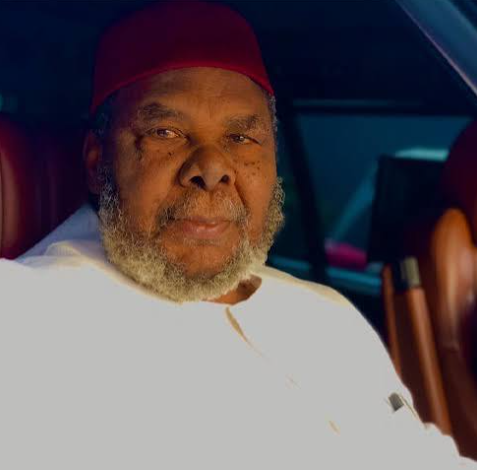
Following his departure from state broadcasting in the late 1980s, Edochie transitioned into the booming Nigerian home video market of the 1990s. Across more than two hundred screen appearances—including Rituals, Igodo, Billionaire's Club, and Genevieve Nnaji's 2018 film Lionheart—he turned Igbo proverbs and deliberate pauses into his trademark. In 2003, President Olusegun Obasanjo conferred on him the national honour of Member of the Order of the Niger, alongside later lifetime achievement awards from the Africa Film Academy and Africa Magic.
That deliberate cadence stands in sharp contrast to how scripts are written for global streaming platforms and YouTube channels across West Africa today. Commissioning editors and digital creators routinely optimize opening scenes for short attention spans, stripping away slow-building rhetorical tension to prevent viewers from clicking away. Yet Edochie's clips remain among the most shared cultural memes across Nigerian and Ghanaian social feeds precisely because his measured delivery commanded attention without relying on loud edits. Studios chasing global algorithms risk flattening local linguistic texture when they treat cultural proverbs as ornamental filler rather than the structural spine of a scene.
How did Pete Edochie's broadcasting background influence his Nollywood acting style?
Pete Edochie spent two decades in radio and television administration before his breakthrough screen role, which trained him in vocal projection, strict pacing, and script precision. Unlike actors trained solely for visual cinema, he used measured pauses and resonant baritone delivery from his radio years to anchor dramatic tension.
Preserving Institutional Memory in African Media
Edochie's passing also highlights a persistent archiving and mentorship gap across West African creative industries. Before his health declined, he supported digital knowledge initiatives, including appearing in a 2017 campaign to encourage older Nigerians to contribute to Wikipedia, and launched a legacy mentorship platform for emerging storytellers. Despite these efforts, much of the early television footage from his era at the Nigerian Television Authority and regional stations remains poorly digitized or locked in deteriorating physical tape archives.
Media companies and film schools in Enugu, Lagos, and Accra face a clear institutional choice as founding veterans pass on. Relying on informal social media tributes preserves nostalgia, not craft. Without systematic digitization of classic broadcast dramas and structured voice-and-script fellowships modeled on early public service standards, younger creators lose direct access to the technical benchmarks that gave West African cinema its distinct identity. Edochie's career ended in Enugu on November 25, 2026, nearly six decades after he first stepped into a broadcasting studio in 1967.