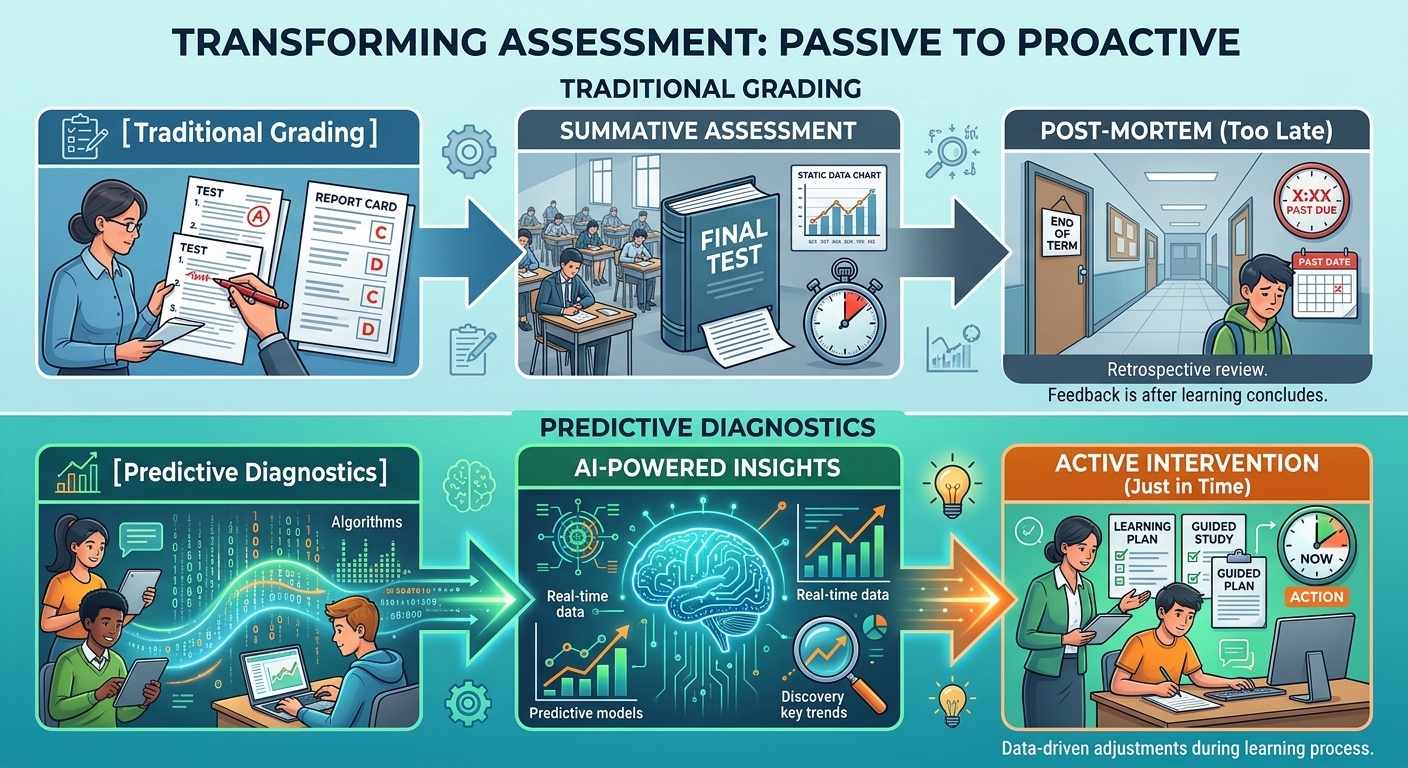
- Proactive analytics replacing retrospective grading: West African schools are adopting AI-driven platforms like Bluerain to track daily classroom data and identify student struggles before final exams occur.
- Targeted academic recovery: Longitudinal tracking isolates compounding learning gaps, allowing educators to group students by specific conceptual blind spots and deploy customized remedial lessons.
- Reduced administrative burden and better communication: Simplified dashboards automate routine data entry, freeing up teaching time while sending instant academic updates directly to parents via text alerts and web portals.
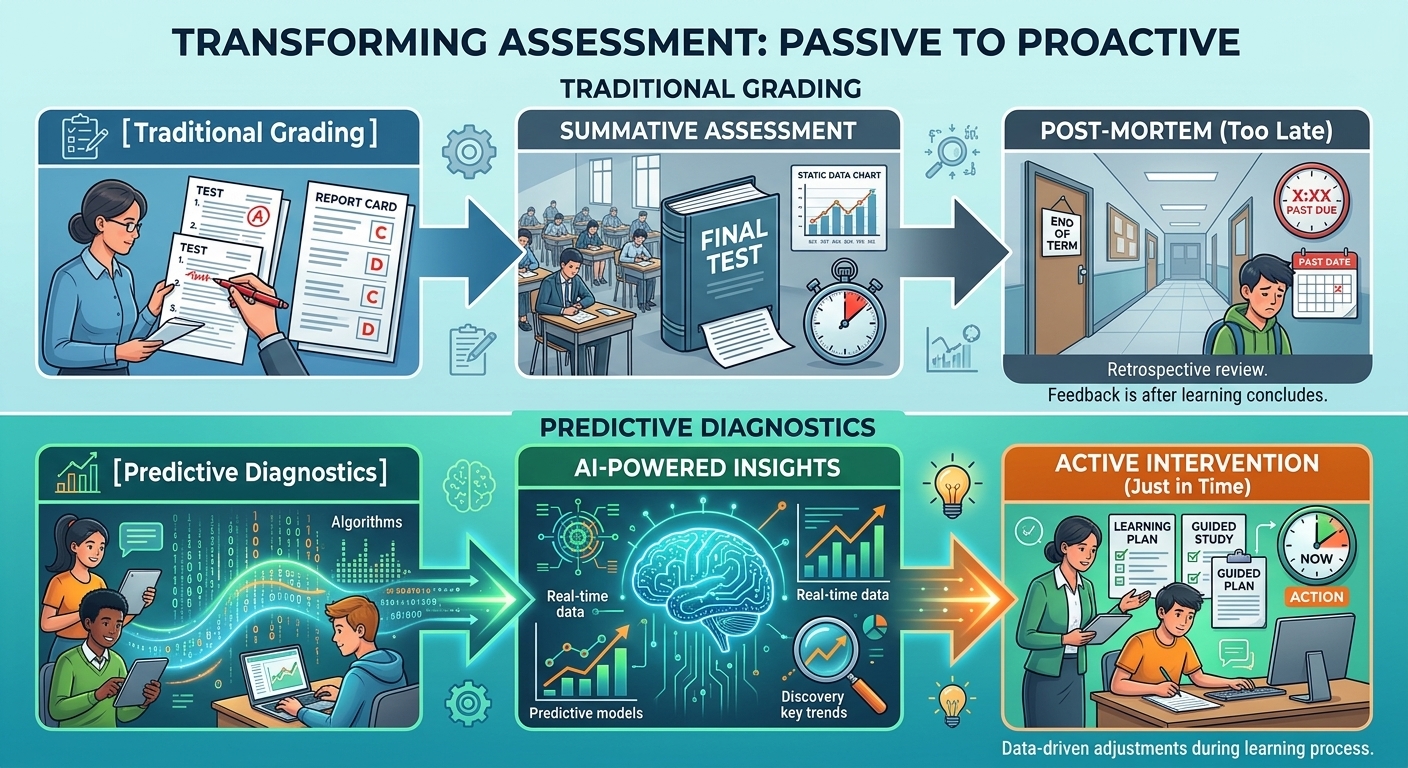
Traditional school report cards function like an academic autopsy. They summarize student failure after a term ends, when helping learners alter their trajectories becomes impossible. Modern administrative engines now challenge this passive model across West African schools.
AI-driven diagnostic toolkits analyze everyday classroom data to pinpoint conceptual friction points before final examinations approach. Educators utilize these live dashboards to identify students who fall behind early. The automated systems shift data architecture away from retrospective grading into immediate preventive support.
Replacing Summative Grading with Active Predictive Analytics
Classroom metrics often remain trapped in static broadsheets. By contrast, specialized platforms build active profiles that evaluate daily homework, test patterns, and syllabus engagement metrics. Software systems like Bluerain, developed by U3Tech Business Solutions Ltd, provide teachers with tools to trace real-time student updates.
Instead of waiting for low midterm numbers, teachers secure early warnings regarding performance vulnerabilities. System algorithms distinguish between basic foundational deficits, such as early fraction concepts, and current topic confusion, such as advanced ratios. This clear systemic division enables pinpoint remedies.
Deploying Multi-Term Pathways for Targeted Academic Recovery
Tracking scholastic metrics across consecutive terms gives teachers the historical context required for robust, targeted intervention pathways. Longitudinal tracking isolates short-term performance dips from compounding learning gaps. Systems generate custom practice sets and targeted micro-lessons based on precise analytical results.
At schools like Nazareth Schools in Kaduna, older manual processing methods have given way to modern school software ecosystems. This operational upgrade ensures that continuous assessment scores translate directly into structured lesson plans. Teachers group students by specific shared blind spots to run specialized remedial sessions during classroom hours.
Overcoming Administrative Burnout via Simplified Dashboards
Advanced diagnostic platforms frequently fail when data entry demands overwhelm teaching staff. To counter this, newer school management architectures focus on basic interface simplicity and rapid processing workflows. Teachers insert raw test marks into optimized assessment editors that update regional dashboards automatically.
This layout removes repetitive administrative tasks, giving staff more hours to focus directly on student engagement. Furthermore, these diagnostics engage parents by sending real-time summaries through dedicated web portals and text alerts. This external link guarantees that academic updates reach home environments instantly, keeping families aligned with classroom goals.
How do predictive diagnostic tools transform student performance evaluations in West African schools?
Predictive diagnostic software moves educational assessment from retrospective grading to proactive, real-time intervention. By continuously evaluating daily coursework and tracking learning patterns across multiple terms, these platforms isolate individual student deficits early. This automated insight empowers educators to deploy targeted remedial pathways and engage parents before high-stakes exams occur[cite: 12].