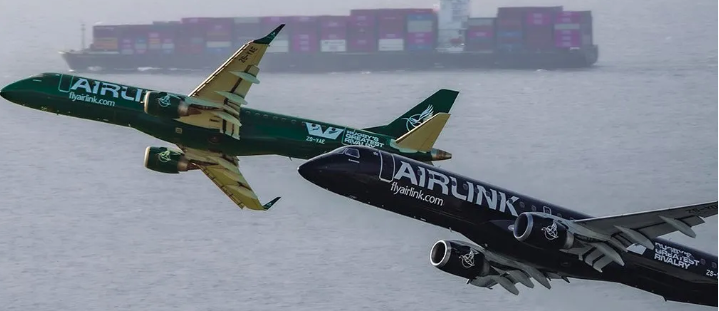
Cape Town, South Africa — September 4, 2026 — The South African Civil Aviation Authority (SACAA) launched an active compliance review following a dramatic double flyover executed by Airlink over a packed stadium in Cape Town. The low-altitude maneuver took place on August 29, 2026, moments before a major rugby match between South Africa and New Zealand at the DHL Stadium. Two commercial Embraer jets roared over fifty thousand spectators, with flight tracking data indicating the lead aircraft cleared the top of the stadium structure by less than fifty feet.
Footage of the spectacle circulated rapidly across international digital networks, generating intense debate among aviation professionals and the general public. While local sports figures and national enthusiasts praised the precision of the flight crews, global pilot associations and safety analysts raised critical questions regarding low-altitude risk margins over densely populated urban venues.
Regulatory Compliance and Data Analysis
SACAA confirmed that while the flight had undergone prior vetting and simulator testing under special air event regulations, the ensuing public backlash and technical data discrepancies prompted a deeper formal assessment. Regulators requested comprehensive operational parameters from the airline operator.
In response, Airlink voluntarily submitted digital flight data recorder (DFDR) downloads to support the regulatory audit. Airline executives maintained that each aircraft was commanded by three senior captains possessing extensive flying hours, operating strictly within pre-approved safety altitudes and speed profiles.
Cancellation of Subsequent Display Plans
Following the initiation of the regulatory review, Airlink formally withdrew its application for a repeat performance scheduled for the following weekend in Johannesburg. Airline leadership cited unfavorable weather forecasts as the primary reason for canceling the planned sequence at FNB Stadium, effectively halting further aerial demonstrations while investigations continue.
Regional transport analysts note that commercial carriers frequently leverage high-visibility public events to boost brand awareness. However, balancing corporate promotional spectacles with strict aviation risk management remains a delicate operational challenge for regional carriers competing in African markets.
Broader Implications for Aviation Protocols
Aviation safety specialists across the continent emphasize that rigorous post-event analysis protects the long-term integrity of commercial flight standards. South Africa maintains a robust commercial safety reputation, making transparent regulatory oversight essential for preserving public confidence.
The civil aviation authority indicated that a comprehensive findings report alongside official recommendations will be published upon the conclusion of the digital data evaluation. Regulatory compliance evaluations and operator briefings are scheduled to proceed through September 15, 2026.
What triggered the South African aviation safety investigation into Airlink?
The South African aviation safety investigation was triggered by public debate and technical data analysis showing that two commercial jets flew exceptionally close to the roof of a packed stadium in Cape Town during a pre-match promotional flyby, prompting the regulator to verify compliance parameters.
The South African Civil Aviation Authority is scheduled to finalize its review and release technical recommendations by September 15, 2026.