
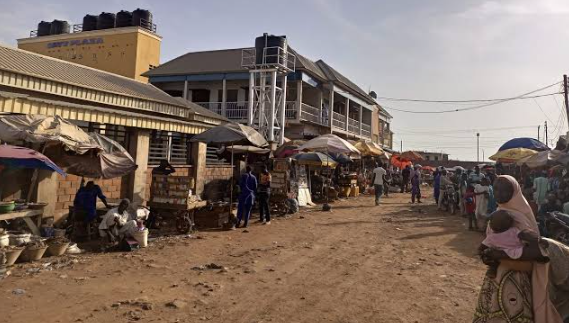
- Economic epicenter: Spanning over twenty hectares in Kaduna North, the market functions as Northern Nigeria’s primary trade hub and distribution node for international commodities.
- Historical evolution: Originating as a colonial-era trading post, the site was regularized into an organized municipal grid in 1975 and later rebuilt with modern infrastructure following a devastating 2002 fire.
- Structured partitioning: The complex features more than 6,500 specialized shops—ranging from a highly profitable textile district and a fortified jewelry sector to agricultural zones—supported by on-site banking and regional transport links.
Kaduna Central Market remains the vital economic engine of Northern Nigeria. The sprawling urban trading hub sits prominently within the Kaduna North Local Government Area. It occupies a massive, strategic landmass exceeding twenty hectares in the city center. Major transport veins enclose the property. These perimeter paths include Ibrahim Taiwo Road, Market Road, and Ahmadu Bello Way. The market functions as the main terminal for the municipal transport network. Thousands of tricycles and local mini-buses drop off wholesale buyers here every morning. The physical location operates as a critical distribution node for international commodities.
The marketplace began as a simple open-air trading post during the early colonial settlement era. Traveling caravan merchants used the open lot to exchange agricultural produce along traditional trans-Saharan routes. As the municipal population spiked, the regional government intervened to regularize local commerce. Planners completely flattened the informal structures to build an organized municipal grid in 1975. The state authority later renamed the complex the Sheikh Abubakar Gumi Central Market. This title honors the prominent Grand Khadi of the Northern Region who died in 1992.
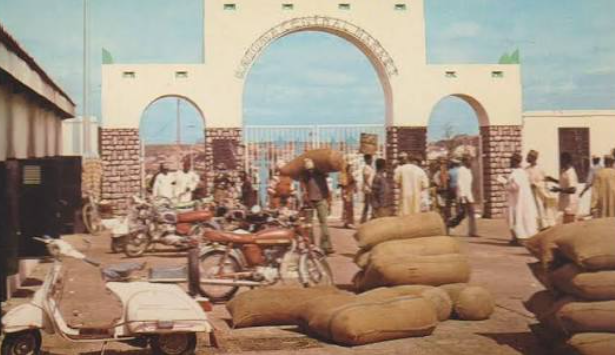
Spatial Infrastructure and Commodity Partitioning
The interior architecture relies on a highly structured grid designed to optimize heavy daily foot traffic. More than 6,500 locked-up shops form the permanent core of the property. Architects partitioned the space into distinct product zones to prevent absolute chaos among competitive vendors. The textile and fabric section represents the most profitable quarter within the entire complex. Merchants here manage high-volume wholesale distribution of northern brocades, Ankara wax prints, and traditional lace garments. The textile grid attracts retail boutique owners from neighboring states and West African nations.
A separate heavily fortified sector contains the gold and jewelry quarter. Specialized goldsmiths melt, refine, and trade precious metals under tight security parameters. The agricultural sector occupies the open edges of the property. Rural farmers offload heavy sacks of guinea corn, ginger, peppers, and seasonal grains from trucks here. The state-run Kaduna Markets Management Company supervises general maintenance, collects operational tolls, and enforces weekly sanitation exercises. Internal trader unions resolve minor pricing disputes and manage night watchmen patrols across the partitioned avenues.
The Fire Inferno and Structural Reformation
The marketplace suffered its greatest infrastructural catastrophe at the dawn of the twenty-first century. A devastating fire completely gutted the entire commercial complex in 2002. The massive inferno ruined thousands of businesses and leveled the mid-century concrete blocks. Financial losses crippled the local informal economy for several months. The state government immediately initiated a multi-billion Naira reconstruction phase to rebuild the facility. Engineers introduced modern fire-resistant concrete stalls and wider access roads to facilitate emergency vehicle movement.
The rebuilt market incorporated modern fiscal infrastructure directly inside the perimeter walls. Several commercial bank branches and microfinance institutions set up active banking halls within the complex. These digital money bureaus secure cash deposits from traders who execute millions of Naira in transactions daily. The morning rush begins precisely at 7:30 AM when international supply trucks arrive from Cameroon and Niger. The market feeds secondary suburban markets like Kasuwan Barchi, ensuring a continuous supply of essential household goods across the region.
Why did this unique cultural tradition evolve across West Africa?
West African municipal authorities designed centralized covered markets to formalize regional trade routes and collect essential tax revenues. These grand architectural complexes transformed historic open-air caravan stops into highly organized commercial centers that successfully sustained economic growth, urban migration, and inter-ethnic integration within rapidly expanding trade hubs like Kaduna City.
The resilience of the trading hub hinges on its deep integration into the regional transport grid. Thousands of independent retail merchants rely on the central warehouses to restock their suburban storefronts weekly. The physical layout continues to adapt as digital mobile banking replaces traditional cash bags on the counter. The modern concrete marketplace stands as a monument to northern entrepreneurship and post-independence urban planning. The regional administrative council officially approved the original modern market expansion project on November 14, 1974.