

- Nationwide freeze on new programmes: The Ghana Tertiary Education Commission halted all institutional applications to launch new PhD tracks while it conducts a comprehensive audit of existing doctoral programs.
- Severe capacity and supervision strains: Regulators flagged critical issues including over-enrolment, poor supervisor-to-candidate ratios, and institutions using postgraduate admissions as a financial revenue bridge at the expense of academic standards.
- Admissions to current tracks remain open: Prospective students can still apply to existing, accredited doctoral programs, while institutions that pass the peer-reviewed audit will eventually regain clearance for new offerings.
On November 21, 2026, Ghana Tertiary Education Commission Director-General Professor Ahmed Abdulai Jinapor announced a nationwide freeze on new institutional applications to mount PhD programmes during the 19th Congregation of the University of Mines and Technology in Tarkwa. Two days later, following widespread confusion among prospective postgraduate students, GTEC clarified that admissions into existing accredited doctoral programmes remain open. The pause targets universities seeking fresh accreditation to launch new doctoral tracks while regulators conduct a peer-reviewed audit of every active PhD programme across the country.
Anatomy of a Capacity Crunch
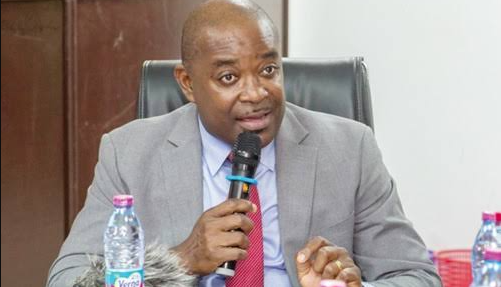
GTEC's audit will scrutinize seven core indicators across Ghanaian campuses: accreditation status, student enrolment figures, supervisor-to-candidate ratios, supervisor academic ranks, laboratory and library facilities, completion rates, and the integrity of thesis examinations. Professor Jinapor flagged severe over-enrolment as a primary trigger, citing one unnamed institution that admitted more than 250 doctoral candidates, including 52 students inside a single programme. By November 23, the audit had already caught a public business institution admitting candidates into an unaccredited public health PhD programme, prompting GTEC to order the immediate revocation of those admissions.
This crackdown exposes a quiet financial distortion inside West African higher education. Public and newly chartered private universities across Accra, Kumasi, and Cape Coast face tight operational budgets and delayed subventions. Postgraduate tuition, paid in hard currency or high local fee bands, became an attractive revenue bridge. Unlike undergraduate lectures that scale through large auditoriums or digital learning management systems, doctoral research resists mass production. When one senior lecturer supervises fifteen dissertations alongside heavy undergraduate teaching loads, feedback stalls and completion timelines stretch past seven years.
Why Digital Expansion Cannot Fix Thin Supervision
Speaking earlier at the African University of Communication and Business graduation in Accra on October 31, 2026, Professor Jinapor warned that online and blended delivery models must never lower academic standards or turn doctorates into commercial products. At the University of Cape Coast, Professor Ampah-Mensah echoed concerns over supervisory strain, proposing a strict cap of one supervisor to five doctoral candidates per year so faculty can deliver meaningful guidance alongside administrative duties.
Many institutions mistook EdTech adoption for institutional capacity. Uploading seminars onto virtual platforms or using automated plagiarism checkers makes administrative tracking easier, yet software cannot replace senior academic mentorship or wet-lab bench space. In STEM fields especially, GTEC's own recent findings highlight low completion rates driven by thin senior supervision and scarce research funding. Expanding intake cohorts without expanding qualified faculty creates a credential bottleneck that erodes international recognition for every Ghanaian doctorate.
Does GTEC's PhD freeze stop students from applying to existing Ghanaian universities?
No, students can still apply to existing accredited PhD programmes in Ghana. GTEC's November 2026 freeze strictly stops universities from submitting applications to launch brand-new doctoral programmes until regulators audit current supervision ratios, research facilities, and accreditation compliance.
The Trade-Offs Ahead for University Management
GTEC's peer-review audit relies on external academics with subject expertise rather than administrative staff alone, and institutions that pass verification—such as UMaT, which Jinapor singled out positively in Tarkwa—will regain clearance to propose new programmes. Conversely, programmes found operating purely as cash cows face suspension or forced intake caps.
University administrators now face an immediate revenue trade-off. Capping doctoral cohorts at sustainable ratios will shrink short-term postgraduate fee inflows for business schools and humanities faculties alike. Yet the alternative is worse: allowing unaccredited or under-supervised programmes to proliferate invites foreign credential evaluators and employers across West Africa to discount Ghanaian degrees. Following GTEC's July 2026 notice against 15 unaccredited learning centres and its September 2026 list of 110 unrecognised institutions, the November 21 PhD audit marks the regulator's sharpest test yet of whether quality enforcement can outmuscle campus revenue pressure.