
- Ambitious curriculum overhaul: Ghana plans to introduce coding, robotics, AI, and electronics from kindergarten through Primary Six, though the revised syllabus still awaits Cabinet approval and a definitive rollout date.
- Infrastructure and training gaps: Severe deficits in basic ICT labs, reliable electricity, and specialized teacher training threaten to leave under-resourced public schools behind private institutions.
- Prerequisites for success: A viable nationwide implementation depends on securing a dedicated hardware budget, comprehensive teacher upskilling, and foundational offline learning rather than symbolic policy announcements.
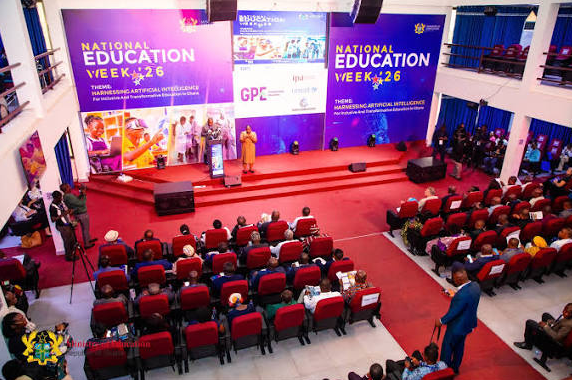
Education Minister Haruna Iddrisu announced on November 24, 2026, at the Ghana Tertiary Education Commission in Accra that Ghana plans to introduce coding, robotics, artificial intelligence, and electronics from kindergarten through Primary Six. Speaking at the opening of the National Education Week and Evidence Summit, he noted that none of these subjects are currently active in classrooms. The revised basic-school curriculum still awaits formal Cabinet approval, and the ministry has not yet set a rollout date.
Policy announcements move faster than classroom readiness across West Africa. Adding robotics and electronics to primary schools sounds bold on a podium in Accra, yet thousands of public basic schools still struggle with basic ICT labs, reliable electricity, and stable internet access. Without a clear hardware budget or procurement plan, a revised syllabus risks widening the gap between well-funded private schools in East Legon or Kumasi and under-resourced public classrooms in rural districts.
Policy Ambition Meets Classroom Reality
During the summit in Accra, researchers were tasked with presenting Ghanaian evidence on digital learning to shape a draft AI-in-education roadmap covering 2027 to 2030. Iddrisu previously flagged parts of this overhaul in December 2025—when he also mentioned financial literacy—and again in July 2026. While the 2027 Budget allocates funding for 10,000 recruitment places across teachers, non-teaching staff, and university faculty, the minister provided no cost breakdown for the new tech subjects, no list of required classroom equipment, and no timetable for retraining existing basic school teachers.
Recruiting 10,000 personnel helps ease general staffing deficits, but general recruitment does not automatically produce primary teachers qualified to debug code or wire basic circuits. In Ghanaian teacher training colleges, digital pedagogy remains uneven. If the ministry expects current classroom teachers to deliver robotics and AI lessons without funded, hands-on retraining cycles, schools will end up teaching coding theory on chalkboards—a recurring trap in West African ICT education.
Guardrails Against Shortcut Learning
Iddrisu framed the policy around human capital development while warning against uncritical tech adoption. He stated that government policy aims to empower teachers with technology rather than replace them, and cautioned that AI tools must not produce lazy learners from primary school up to university level by offering shortcuts that undermine graduate quality. At the tertiary level, Ghanaian students are already showing competitive capability, highlighted by an Ashesi University team winning the tertiary title at the Pan-African Robotics Competition in Senegal in November 2026.
That contrast tells the real story of Ghana's tech pipeline. Elite institutions like Ashesi University thrive because they combine small cohorts, dedicated labs, and industry mentorship. Scaling that energy down to kindergarten and Primary Six requires a completely different playbook focused on foundational logic and offline computational thinking before expensive hardware enters the room. Treating AI as a magic fix at age six without fixing foundational literacy and numeracy will only compound learning deficits.
When will Ghana start teaching AI and coding in basic schools?
Ghana has not announced a start date for teaching AI, coding, robotics, or electronics in basic schools. Education Minister Haruna Iddrisu confirmed on November 24, 2026, that the revised curriculum still requires Cabinet approval, while a broader AI-in-education roadmap is being drafted for 2027 to 2030.
What Must Happen Before Rollout
Before any new syllabus reaches pupils, Cabinet must sign off on the curriculum framework and the Ministry of Education must align its 2027 to 2030 AI-in-education roadmap with concrete budget lines. Right now, the ministry has committed funds for 10,000 general education recruitment slots in the 2027 Budget, alongside ongoing evidence gathering from Ghanaian digital learning researchers convened at the Ghana Tertiary Education Commission.
Success will depend on sequencing rather than speed. Publishing an equipment list, ring-fencing funds for teacher upskilling, and piloting low-cost electronics kits in selected districts must happen before a nationwide mandate takes effect. On November 24, 2026, in Accra, the ministry formally opened the evidence-gathering phase to build its 2027–2030 roadmap while awaiting Cabinet clearance on the revised basic curriculum.