
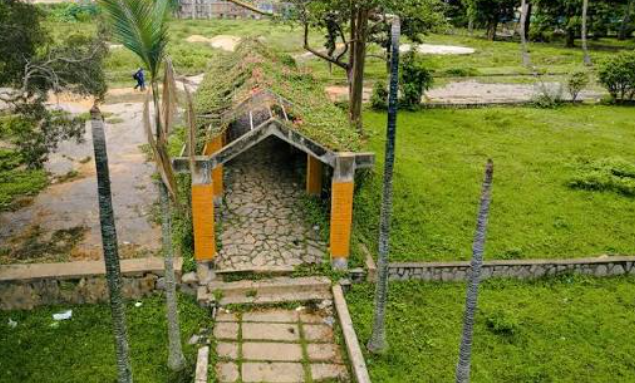
- Origins and layout: Spanning 7,000 square meters along the River Kaduna, Gamji Gate evolved from a 1914 colonial garden into a public park expanded by Northern Premier Sir Ahmadu Bello.
- Architectural significance: The property houses the historic Lugard Footbridge, a 14.2-meter iron pedestrian bridge originally built in Zungeru in 1904 before being relocated to Kaduna in 1920.
- Cultural and civic shift: Long celebrated as a premier holiday hub featuring a mini zoo and entertainment arenas, the park transitioned into a protected national monument following recent wildlife preservation reforms.
Gamji Gate, historically recognized as Kofar Gamji Park, represents a foundational piece of urban recreation in Northern Nigeria. The premier amusement venue sits along the Shooting Range New Extension in Kaduna City. It occupies an expansive landmass of approximately 7,000 square meters. The location functions as a core landmark directly adjacent to the Kaduna Police College. A natural branch of the River Kaduna flows right through the property. This geographic feature splits the entire park into two separate sections. The dual layout historically necessitated advanced colonial civil engineering to connect the halves.
The space began as a quiet colonial garden around 1914. British administrators built the site to serve as a private relaxation zone. Following national independence, the Premier of the defunct Northern Region, Sir Ahmadu Bello, expanded the facilities. The park transformed into a public haven for local residents seeking unity and entertainment. It later took the official title of General Hassan Usman Katsina Park. The name Kofar Gamji translates locally to Gamji Gate. This title honors both the stone gate entry structure and the prominent native trees surrounding the perimeter.
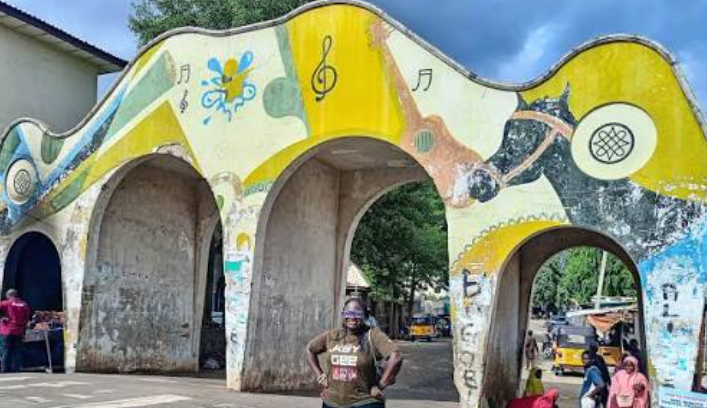
Colonial Infrastructure and National Monuments
The architectural anchor of the park remains the historic Lugard Footbridge. Sir Frederick Lugard originally constructed this iron pedestrian bridge in 1904. The initial installation occurred in Zungeru, which served as the early capital of the Northern Protectorate. Engineers designed the structure to connect the colonial governor's residence with secondary administrative quarters. Following political realignment and the unification of regional protectorates, workers dismantled the bridge. They relocated the iron framework to the new Northern Headquarters in Kaduna City during the year 1920.
The pedestrian bridge measures exactly 14.2 meters in length and 1.75 meters in width. The structural composition relies heavily on iron beams, concrete supports, handrails, wire gauze, and 42 wooden steps. It stands as a rare surviving example of early twentieth-century civil engineering in West Africa. This engineering feat predated the widespread introduction of motorable roads or railway systems. Couples and wedding parties frequently use the green and white painted structure as a scenic backdrop. The bridge provides crucial passage across the fast-flowing tributary dividing the recreation grounds.
The Evolution of Civic Entertainment and Zoology
For several decades, Gamji Gate operated as the undisputed epicenter of holiday crowds in Kaduna. Families routinely flooded the wide lawns during major annual events. These celebrations included Sallah, Christmas, New Year, and Valentine's Day. The park incorporated an open-air performance arena that hosted live musical talents and dance troupes. Young artists used the central stage to promote their creative productions. Specialized facilities like the CD World Play Club became household names among local youth seeking communal entertainment spaces.
The park also featured a state-owned mini zoo that provided public education. The enclosure inventory included a West African lion, striped hyenas, baboons, crocodiles, ostriches, tortoises, and peacocks. A dedicated crocodile pond and shaded orchards offered visitors an immersive encounter with regional fauna. Private operators managed a children's playground equipped with water slides, a sliding pool, and a fountain. These recreational additions transformed the historic landscape into a multi-generational social hub drawing thousands of weekend visitors.
Why did this unique cultural tradition evolve across West Africa?
Colonial governments established urban green spaces to provide secluded recreational zones for European administrative officers. Post-independence West African leaders repurposed these scenic landscapes into public amusement parks. This strategic transformation successfully fostered regional integration, civic identity, and accessible family entertainment within rapidly growing metropolis areas like Kaduna City.
The structural integrity of Gamji Gate faced major challenges in the early twenty-first century. Severe seasonal flooding, national economic inflation, and inadequate enclosure maintenance compromised the welfare of the captive animals. Non-governmental volunteers intervened to provide emergency veterinary care and disinfection. The Kaduna State Government eventually signed an official memorandum of understanding with wildlife preservation organizations. This legislative agreement permanently closed the zoo section to transfer the surviving animals to ethical sanctuaries. The historical site was declared a national monument on February 16, 1956.